EHU in Europe - no earth

Joined
Aug 28, 2020
Posts
59
Likes collected
110
Funster No
75,123
MH
Not yet
Exp
Newbie
Hi all,

Have stayed in a few European campsites recently where my electrical checker for polarity reports no earth. Hymer van seems happy enough but getting tingles from the chassis / wheels. I have got metal stabiliser legs and this seems to earth the van, but are there any other solutions? Is this unsafe?

Many thanks,

Mike
 
No, unless you decide to get hold of a live wire.
 
Upvote 0
Have stayed in a few European campsites recently where my electrical checker for polarity reports no earth. Hymer van seems happy enough but getting tingles from the chassis / wheels. I have got metal stabiliser legs and this seems to earth the van, but are there any other solutions? Is this unsafe?
Assuming your electrical checker is correct and there is indeed no earth, then I think it is unsafe. I would imagine it does not comply with the regulations, but I don't know the small print of all the regulations.

The protective earth (PE) system is fundamental to safety, and is the basis for mitigating many dangerous faults. It is also required for the RCD shock protection device to work. As you say, all the appliances work fine without an earth, but any fault can cause a dangerous hazard.

Where are you checking, at your sockets or at the hookup post? In my experience a no earth fault is rare, are you sure it's not your hookup cable or a loose wire in the hookup inlet?
 
Upvote 0
lost count on the number of ECU's I have encountered in Spain and France with no earth, it seems to be standard practice over there, if you are worried maybe incorporate a RCD somewhere from the electrical system you are hooked up to if worried.
 
Upvote 1
It is also required for the RCD shock protection device to work.
Not so. That was an ELCB (Earth Leakage Circuit Breaker). Simply put an RCD monitors current coming in on the live lead and compares it with the current going out on the neutral. If there is a difference, the power is going somewhere else (possibly through you or down to earth_ so it trips.
 
Upvote 0
Any reasonably modern van will have a RCD installed. Looks like the main switch with a test button.

Subscribers  do not see these advertisements

 
Upvote 0
Get yourself a plug in socket tester. That will tell you if there are problems. If you are getting 'tingles' it's possibly static. If the chassis is live at 230V you need a professional to look at the installation.
 
Upvote 0
Stayed at a site this year near Salamanca, no earth on the Martindale. tried several outlets, a different post a different cable then decided it wasn't my problem.
If you are getting tingles it may be because there's no earth but it also means you have a leakage to what would normally be earthed. I'd check it out. Do you not have a rcd?
 
Upvote 0
Assuming your electrical checker is correct and there is indeed no earth, then I think it is unsafe
Perfectly normal in Europe..
They use double pole breakers, sockets and switches so any fault will trip the breakers without the need for an earth.
Of course, with us Brits living in the dark ages we only have single pole breakers so need an earth.
 
Upvote 0
Some Funsters on here can probably remember when the only problem with the earth was that it was flat and if you drove your motorhome too far it would fall off the edge ...
 
Upvote 0
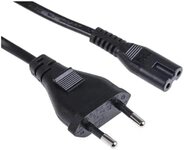
Define 'normal'? It's certainly very common with lots and lots of continental outlets with just the two pins and no third pin or side gates providing earth. That's no different from the 13A pugs you get here fitted to some equipment that have a plastic earth pin, often with a two pin IEC C7 flying socket at the appliance end. They should only be used with items that are double insulated under CE rules but on the continent, that's not always the case. .
 
Upvote 0
Perfectly normal in Europe..
They use double pole breakers, sockets and switches so any fault will trip the breakers without the need for an earth.
Of course, with us Brits living in the dark ages we only have single pole breakers so need an earth.
A breaker will trip if the current exceeds the rating of the breaker, if an electrical item has an earth leakage fault and there is no earth the item or chassis could become live without a breaker tripping.
 
Upvote 0
Besides all the various opinions above, I would be freaking out if I was getting tingles on the chassis. Sounds completely wrong and potentially dangerous

Subscribers  do not see these advertisements

 
Upvote 0
Define 'normal'? It's certainly very common with lots and lots of continental outlets with just the two pins and no third pin or side gates providing earth. That's no different from the 13A pugs you get here fitted to some equipment that have a plastic earth pin, often with a two pin IEC C7 flying socket at the appliance end. They should only be used with items that are double insulated under CE rules but on the continent, that's not always the case. .
I am aware that 'Continental Flat 2-Pin plugs' with no earth connection exist, and are in common use in houses. I haven't seen any flat 2-pin sockets providing power for campervans.
Euro2PinPlug.jpg
Maybe one camper's multiway adapter will have flat 2-pin sockets as outputs, but all the supply boxes should have round '2-pin' sockets, which should all have an earth contact - either twin sliding contacts top and bottom, or reversed earth pin in French sockets.
 
Upvote 0
I am a little confused about tingles from the chassis. What and where are you touching, and what do you have on your feet. If decent shoes with rubber or composite soles, and assuming you are not standing in water, the likelihood is that it's a static discharge.

Do you have a short length of copper pipe available?. A foot or so will do it. Drive the pipe into the ground near the motorhome and water it in well. With a multimeter set on the highest DC voltage see if there is a measurable voltage between a clean point on the chassis, and the pipe. You may find it's a high voltage (static). Then test the same with the highest AC voltage setting. That will tell you if the chassis is live. Or use an old lamp holder, tungsten mains bulb and put that between the chassis point and the tube. If you then connect the EHU, does the bulb light up even momentarily? If so you have a dodgy earth connection somewhere.

I get a shock nine times out of ten with my car after a journey if I touch the door handle and am wearing light shoes.
 
Upvote 0
I just don't get all the people who test hook ups when they're abroad it's a bit like thinking that the water might not be as safe as here maybe it wasn't in the 1960,s but times have changed. Has anyone ever had a serious injury from site electrics in Europe? How many more motorhomes are there in Europe than in the UK?
 
Upvote 0
I got a tingle off some cable tray we installed a few years ago for a load of air con pipes and cables, my aluminium ladders were leant against it. I measured a voltage on it but can't remember what it was. My partner panicked and was convinced we'd gone through a cable with a screw but I checked the vac pump earth and it was disconnected. (The vac pump was sat on the end of the cable tray 20m away) I fixed the earth connection and the voltage on the tray disappeared 👌😎 so that must have been an induced voltage or stray capacitance? 🤔
 
Upvote 0
I get a shock nine times out of ten with my car after a journey if I touch the door handle and am wearing light shoes.
If it's static you will get one shock as the static dissipates through you to earth. If you touch again and get a tingle, and repeat it several times, it's not static, it's a mains fault.
 
Upvote 0
The type E in France has an earth pin, type F has 2 earth clips. In Europe the neutral is earthed at the transformer. Just because Brit stuff gets confused doesn't make it wrong or unsafe.

Your van has an RCD & MCB's plus all of your plug in gear is fused too. Not to mention an earth strap and don't forget the RCD on the EHU bollard too. Once on hook up the onboard 230v sockets are permanently live anyway.
 
Upvote 0
I just don't get all the people who test hook ups when they're abroad it's a bit like thinking that the water might not be as safe as here maybe it wasn't in the 1960,s but times have changed. Has anyone ever had a serious injury from site electrics in Europe? How many more motorhomes are there in Europe than in the UK?
There are some quirks of the UK system that will make a UK motorhome hazardous in certain rare fault scenarios, that will not occur on European motorhomes. These possible hazards are largely mitigated by making sure that there is a good earth and having an RCD in the mains box. So that's why I test for an earth. Yes, the hazards are unlikely. But then again, I've carried a fire extinguisher for decades and never needed it either.

Subscribers  do not see these advertisements

 
Upvote 1
There are some quirks of the UK system that will make a UK motorhome hazardous in certain rare fault scenarios, that will not occur on European motorhomes. These possible hazards are largely mitigated by making sure that there is a good earth and having an RCD in the mains box. So that's why I test for an earth. Yes, the hazards are unlikely. But then again, I've carried a fire extinguisher for decades and never needed it either.
I'm pretty sure a lot carrying hook up checkers are driving European motorhomes or UK ones make after the move to safer electrical systems. As I understand it unless you're going to start dismantling the system or a plugged in appliance there is zero risk.
 
Upvote 0
From what I've read the evidence of poor quality control with motorhomes is evident on this forum and others. From Autotrail to Winnebago and including in-between.

Therefore I wouldn't trust any make to be 100% safe all of the time. Whilst I haven't heard of anyone being seriously injured or being killed by an electric shock in a van. You can't say it's never happened. There have also been plenty of motorhome fires recorded.

It's also true to say that dealers, or some idiots who think they know everything, are very capable of the odd bodge.
 
Upvote 0
The issue at home and abroad is reverse polarity where the neutral is live and live is neutral. 99.9% of the time that is not a problem but can be with some equipment. The problem occurs because the MCB normally switches the live, but in this case is switching the neutral. If will still drop under overload conditions, but means that the live is still on the appliance, it just has no return path. If you start working on that live circuit or device having checked the trip is down, you would still get a nasty shock. Continental systems generally, but not always, switch both live and neutral I double trips. Your RCD switches both so if that detects an error, it stops the power whether reverse polarity or not.

Again a voltage detector pen like this are cheap and light enough to keep in the van. Always check there is no power at the point you are about to touch a bare conductor. You may have thrown the wrong trip, or the system may be reverse polarity.
 
Upvote 0
The issue at home and abroad is reverse polarity where the neutral is live and live is neutral. 99.9% of the time that is not a problem but can be with some equipment. The problem occurs because the MCB normally switches the live, but in this case is switching the neutral. If will still drop under overload conditions, but means that the live is still on the appliance, it just has no return path. If you start working on that live circuit or device having checked the trip is down, you would still get a nasty shock. Continental systems generally, but not always, switch both live and neutral I double trips. Your RCD switches both so if that detects an error, it stops the power whether reverse polarity or not.

Again a voltage detector pen like this are cheap and light enough to keep in the van. Always check there is no power at the point you are about to touch a bare conductor. You may have thrown the wrong trip, or the system may be reverse polarity.
I must be strange in all the years we motorhomed I can't remember ever taking apart mains electrical items or the system while plugged into a hook up! Why would anyone bother with a polarity reversing lead unless they are likely to dismantle things? I just don't get the fixation wouldn't it be a better idea to forget testing forget reversed polarity leads and just unplug the hook up before taking anything apart?
 
Upvote 0
...

I get a shock nine times out of ten with my car after a journey if I touch the door handle and am wearing light shoes.

I used to get this all thie time but there is a way around it. Open the door then, before you put your foot on the ground, hold on to it at the edge or the top, making sure you're touching metal on the door. Then, while still holding the door, put your foot on the floor and step out. This helps discharge the static electricity in your body through the car, so you don't feel a shock :)
 
Upvote 0
I believe there is a problem with a fundamental difference in philosophy between UK and 'europe' regards electrical supplies.
In UK you find that the 'neutral' wire is at or very close to 'ground'.
The 'live' is at or around 234/240.

Earth is close to earth potential.

I had a boat in Spain. Boat 240 is 'grounded' to anodes and in my case a saildrive.

The 'earth' feed from the Marina was not earthed. The 'neutral' feed was at 64 volts and the 'live' was at 170.

The end result was that there was 64 volts between the saildrive and the salt water. This resulted in the erosion of the drive such that the gears were about to fall out and cost about £4,000 to fix!

Moral of the story:

If you are really fussy, fit an isolation transformer and ignore the 'Euro'earth.

Otherwise, just don't check!!!

Tony
 
Upvote 0

Join us or log in to post a reply.

To join in you must be a member of MotorhomeFun

Join MotorhomeFun

Join us, it quick and easy!

Log in

Already a member? Log in here.

Forum posts reflect the views of individual users and not MotorhomeFun.
MotorhomeFun does not endorse or verify user-generated content.

Back
Top