

At first, the different types of motorhome all look more or less the same. You walk around a motorhome show or scroll through dealers' websites and the vehicles blur into one indistinguishable mass of cream fibreglass and Fiamma awnings. Then you start looking properly, and the differences become obvious very quickly.
A-class, C-class, panel van, campervan, self-build, American RV, fifth wheel. Each one has its own character, its own strengths, and its own particular type of owner. Understanding the differences before you start shopping can save you a lot of time, money, and regret.
Here is a straightforward guide to every main type of motorhome you are likely to come across.
---
What is an A-class motorhome?
Every motorhome starts life as an existing vehicle. A-class motorhomes are where the manufacturer takes that starting point and throws most of it away.
With an A-class, the motorhome builder uses only the bare chassis and engine. All of the bodywork is designed and built from scratch by the motorhome manufacturer themselves. No original van cab, no original body panels. That freedom from compromise shows in the result.
Because there is no existing cab to work around, A-class motorhomes can be designed from the inside out. The full width of the vehicle is available from front to back, typically around 2.2 metres throughout. Drop-down beds over the cab area are a signature feature. Many have a fixed double bed at the rear as well.
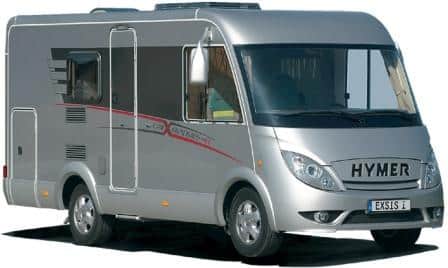
At one end of the scale you have the small Hymer A-class, popular on campsites all over Europe. At the other end you have the vast American RVs that stretch to 12 metres and come with slide-outs, king-size beds, and kitchens your partner might actually enjoy cooking in. Some of the world's most expensive motorhomes are A-class.
One thing to check before you fall too far in love with one: some A-class motorhomes sit above the 3,500kg licence threshold. Make sure your licence covers what you plan to drive. We cover that in full in our motorhome driving licence article.
---
What is a panel van conversion, and is it a proper motorhome?
Take a long-wheelbase high-top delivery van and convert the back into a habitation area. That is the panel van conversion, also known as a B-class in European terms.
Yes, it is a proper motorhome. A well-specified long-wheelbase panel van conversion will have a kitchen, a shower, a toilet, a bed, heating, and more storage than you might expect. Some rival much larger motorhomes for facilities.
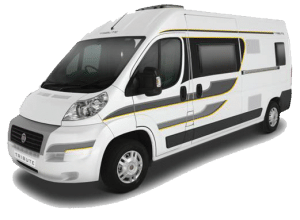
Many people who have owned several motorhomes end up here and stay. The panel van is compact enough to go almost anywhere, easy to drive, fits into a standard car park, and does not announce itself as a motorhome from three streets away. If you want to thread through a French village market without causing a tailback, or simply feel less conspicuous on a wild camping spot, the panel van is hard to argue with.
The trade-off is space. Everything is in a smaller footprint. For couples who travel light and move frequently, that is rarely a problem. For families with a dog and three weeks of luggage, it can be.
---
What is a campervan, and how is it different from other types of motorhome?
Smaller panel van conversions, those without a toilet and often with a pop-top or rising roof, are properly called campervans rather than motorhomes.
The American term for these is a day-van, which is actually a fair description. They are ideal for weekends, great for short trips, and very good at fitting into places larger motorhomes cannot reach. For trips longer than a weekend, the limitations start to show, particularly if you are not planning to stay on campsites with full facilities every night.
Some micro-vans are not even panel van based at all, but converted from car-derived vehicles. That brings its own compromises and its own advantages depending on what matters to you.
---
What is a C-class motorhome?
The C-class is the most common type of motorhome in Europe, and there is a good reason for that. It does the job extremely well at a price most people can afford.
A C-class keeps the original cab of the base vehicle and bolts the habitation section onto the back. The cab might be a Fiat Ducato, a Ford Transit, or a Peugeot Boxer. The living area behind it is built by the motorhome manufacturer to their own specification and layout.
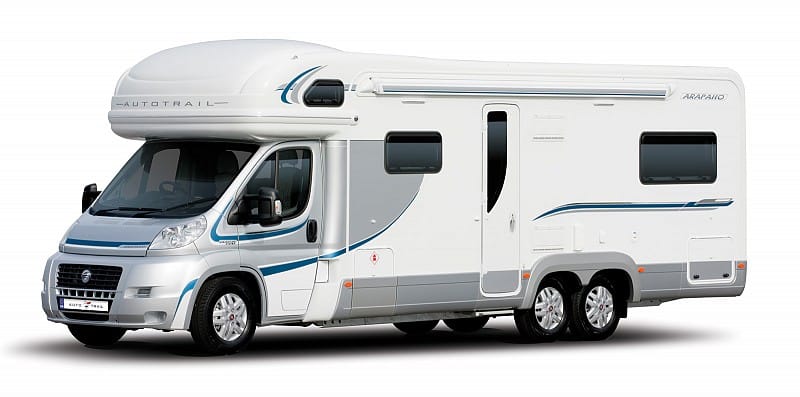
Traditionally the cab area became redundant once you were parked up, but modern C-class designs do a much better job of pulling the front seats into the living space. Most come with a large overcab double bed above the driving compartment. Children are almost universally delighted by these. Parents are too, because the kids disappear up the ladder at bedtime and leave the rest of the van in peace.
If this is your first motorhome and you are not sure where to start, a C-class is usually the sensible place to look. Wide choice, strong dealer support, good availability of used stock, and layouts that cover most needs.
---
What is a self-build motorhome?
Some people build their own motorhomes. Most of those end up fantastic. A few are, frankly, not. That is the nature of self-builds.
The appeal is obvious. A self-build can be exactly what you want in exactly the configuration you want, without compromise. People go down this route for all sorts of reasons: to save money, to build something truly bespoke, or because they want a go-anywhere expedition vehicle that production manufacturers simply do not make.
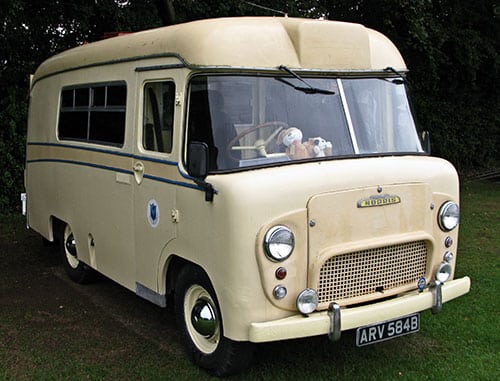
The old ambulance conversion is a classic self-build starting point. So is the horsebox, the ex-military vehicle, and the plain transit someone has spent two years turning into something remarkable.
If this appeals, the self-build section on MotorhomeFun is worth a great deal of your time. There is experience, inspiration, and the occasional cautionary tale that will save you from an expensive mistake.
---
What about American RVs?
American motorhomes use the same ABC classification system as we do. In the US, anything you go camping from, whether a humble trailer or a vast A-class coach, is called a Recreational Vehicle (RV). Some of those RVs have found a following in the UK.
The big ones come with slide-outs: sections of the wall that extend outwards once you are pitched, almost doubling the living area. Onboard, the space can feel extraordinary. Twin sofas, walk-around king-size beds, full kitchens. Then you try to park one in a French village.
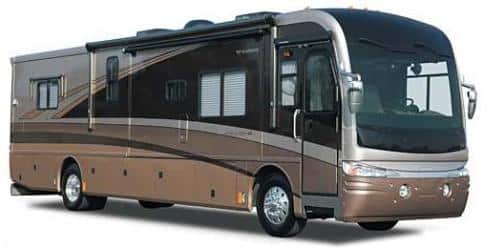
Worth knowing before you get seduced: more than 70% of campsites across Europe set length limits that rule out the largest RVs. Fuel consumption is significant. The largest will require a Category C licence. And manoeuvring something approaching 12 metres in a busy campsite requires either nerves of steel or a very patient co-pilot.
We have toured Europe in an RV. It was great fun. We were also young, brave, and maybe a little bit stupid. Most RV owners are none of those things, which is why most RVs spend their lives visiting steam fairs and motorhome show rally fields rather than threading through Provence or the Dolomites. There is a reason why even older RVs tend to have very low mileage.
They are not wrong for everyone. But they are wrong for more people than the showroom makes them appear.
---
What is a fifth wheel?
The fifth wheel, sometimes called a fiver, is a towable unit that connects to a pick-up truck directly above the rear axle via a specialist hitch, similar to the coupling used on articulated lorries. Several feet of the trailer hang over the towing vehicle, placing around 15% of the weight onto the truck's rear axle.
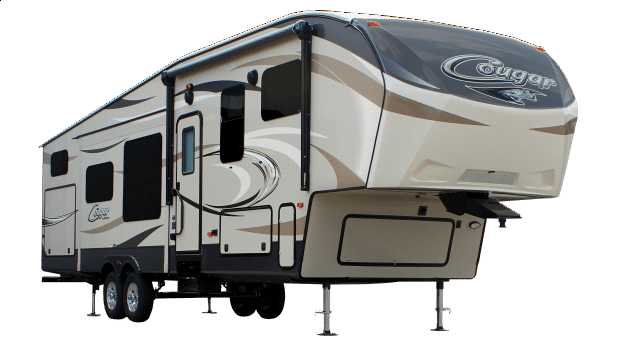
A fifth wheel is easier to manoeuvre than a conventional caravan and typically comes with onboard water and waste tanks, which is why fifth wheel owners often feel it belongs in the motorhome conversation rather than the caravan one. They have a point.
You need a pick-up with a proper fifth wheel hitch to run one. They are more common in American setups, though not exclusively. Celtic Campers in the UK make a British fifth wheel if the idea appeals.
---
Which type of motorhome is right for me?
The honest answer is that nobody can tell you without knowing how you plan to use it.
A couple who want to explore quietly, park anywhere, and move every day will have very different needs from a family who want to set up on a campsite for a fortnight. Someone planning wild camping in Scotland needs a different van from someone who tours French aires and wants maximum comfort.
A few questions that will narrow it down quickly:
How many people will travel regularly? Families need proper forward-facing travel seats with seatbelts for everyone. Many motorhomes have fewer belted seats than berths. Check this first.
What does your driving licence allow? Your standard car licence covers motorhomes up to 3,500kg. Above that, you need a C1. Read the licence article before you fall for something you cannot legally drive.
How long is your driveway? It is surprisingly common for people to buy a motorhome and then discover it does not fit at home. Measure it before you start shopping.
Will you wild camp or stick to campsites? Wild camping rewards self-sufficiency: good payload, solar, large water and waste tanks. Campsite touring rewards comfort and space.
How far off the beaten track do you want to go? A 7-metre coachbuilt will get almost everywhere. A 12-metre American RV will not.
Buy the smallest motorhome you can genuinely live with. You can always trade up later, and the people who wish they had started smaller outnumber those who wish they had gone bigger from the start by a very wide margin.
---
FAQ
What are the main types of motorhome?
The main types are the A-class, the C-class (coachbuilt), the panel van conversion (B-class), the campervan, and the self-build. American RVs and fifth wheels are also part of the family, though less common on UK roads.
What is the most popular type of motorhome in the UK?
The C-class coachbuilt is the most common by a significant margin, in the UK and across Europe. Good balance of space, practicality, and price.
What is the difference between an A-class and a C-class motorhome?
An A-class is built entirely by the motorhome manufacturer on a bare chassis. A C-class retains the original van cab and attaches the habitation section to the back. A-class motorhomes tend to be wider throughout and offer more interior flexibility. C-class are generally more affordable.
What is the difference between a motorhome and a campervan?
A motorhome has a toilet, shower, kitchen, and sleeping area. A campervan is a smaller, simpler conversion, usually without a fixed toilet, and often with a pop-top roof. Motorhomes are self-contained. Campervans generally rely on site facilities.
Is a panel van conversion a proper motorhome?
Yes. A well-specified long-wheelbase panel van will have everything a larger motorhome has, in a more compact and versatile package. Many experienced motorhomers regard the panel van as the ideal form of motorhome.
What type of motorhome is easiest to drive?
A compact panel van conversion or a small C-class on a standard van base. As you move toward larger A-class motorhomes and American RVs, the driving demands increase considerably. However, after a little practise, even the largest motorhomes become easy enough to drive. At first, it will feel enormous, but slowly it will shrink around you and become the norm.
Do I need a special licence for some motorhomes?
Yes. Your standard car licence covers motorhomes up to 3,500kg MAM. Above that you need a Category C1 licence. The largest American RVs may require a full Category C. Read our full licence guide before you start shopping.
---
Not Sure Which Type Is Right for You?
The best advice on types, specific makes and models, and which van suits your particular situation does not come from a dealer. It comes from people who actually own motorhomes and use them every week.
At MotorhomeFun there are more than 80,000 of them. Post your situation, describe how you plan to travel, and see what comes back. The answers will be more useful than anything a showroom will tell you.
If you're not already a member, then come and join us.