
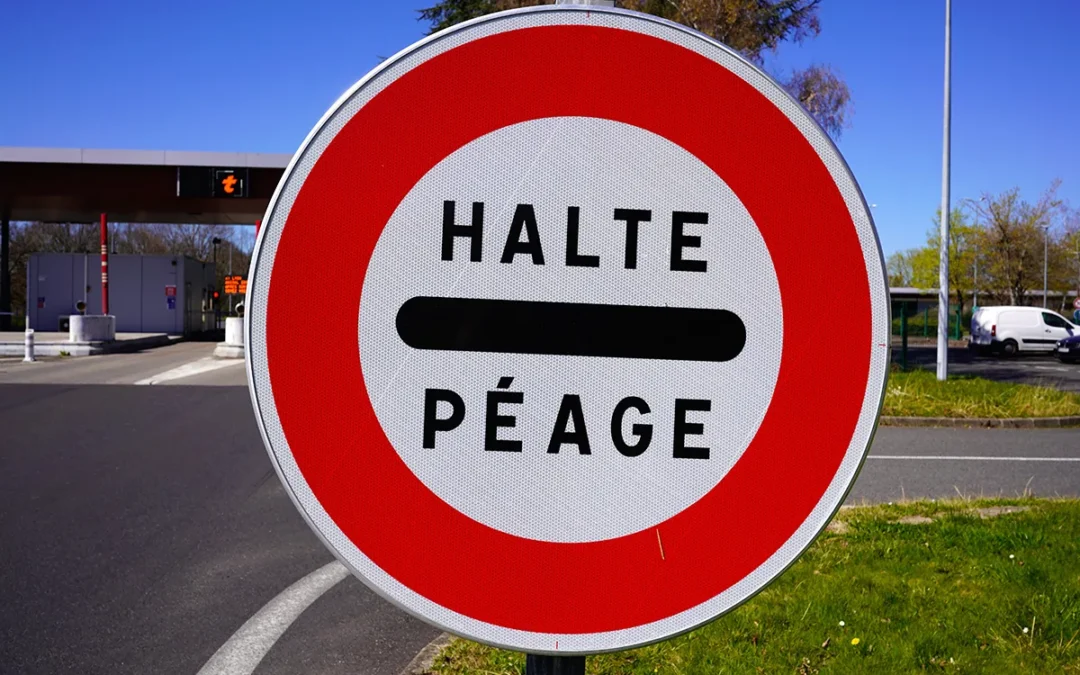
Get a few motorhomers chatting for a couple of hours and one topic is guaranteed to come up: whether to take the N roads in France or use the péage. Everyone has an opinion. Hardly any people have the actual numbers.
That's what this calculator is for. It's a free French tolls calculator built specifically for motorhomes; punch in your port, your destination, and your vehicle height, and it gives you a proper side-by-side comparison of both options including fuel, toll charges, time, and total cost.
The Great French Road Debate
France has two very different road networks running roughly in parallel across the country. The péage motorways are fast, direct, well-maintained, and they cost money. A lot of money once you factor in a motorhome's vehicle class. The free alternatives, the N and D roads, cost nothing to drive but take longer, and exactly how much longer depends heavily on where you're going.

The debate has been rumbling on MotorhomeFun for years, and the honest answer is that both sides have a point. The right choice depends on your trip, your budget, your schedule, and frankly how you like to travel.
How French Toll Roads Work
Before getting into the debate, it helps to understand how the French toll system actually works, because it catches a lot of motorhomers out.
French péage charges are based on vehicle class, not just length. Cars are Class 1. Most standard motorhomes, those under three metres in height, fall into Class 2 and pay around 50% more than a car at each toll. Taller vehicles, A-class motorhomes, high-profile overcabs, anything over three metres, are classed as Class 3 and typically pay close to double the car rate. That difference adds up significantly over a long run south.
How to pay on French toll roads has changed over the years. The old cash-only booths are largely gone. Most péage booths now accept credit and debit cards, and contactless works at many. The slickest option for regular visitors is a Liber-t transponder, a small tag that clips to your windscreen and links to a pre-loaded account. You pull through the télépéage lane without stopping, and some operators offer discounts for using it. If you're planning more than one trip through France, it's worth looking into; you can buy one before you leave the UK from several online retailers.
If you want to know exactly how much the tolls will cost for your specific route before you travel, ViaMichelin and sanef.com are the most reliable route planners for this. Our calculator below gives you a solid comparison figure; for the precise breakdown by toll booth, those two are your best bet.
The Case for the Péage
For long runs, the time saving is real. Calais to Nice on the péage is around ten and a half hours of driving. On the free roads the same journey is closer to eighteen. That's a full day. If you have a fortnight in the south of France and you want to spend it on the Côte d'Azur rather than working your way through the Massif Central, the péage makes good sense.
The motorways are also easier driving. Constant speed, fewer stops, less gear changing. If you are a speed merchant, there are far fewer speed traps too. For a heavy motorhome on a long trip, that matters for fuel economy too, and since the péage route is usually shorter in distance, your fuel cost can be lower than you expect.
And if you're travelling in a group or family with a deadline, a ferry to catch, or a site pitch booked, the péage is the predictable choice. The N roads are not.
The Case for the Free Roads
The French toll charges for motorhomes are not cheap. A standard motorhome under three metres is classed as a Class 2 vehicle, which means you pay roughly one and a half times the car rate. A taller vehicle, an A-class or high-profile overcab, falls into Class 3 and pays roughly double the car rate.
Calais to Bordeaux on the péage will cost a Class 2 motorhome around €85 in tolls. On top of your fuel. On top of everything else. For a couple doing a two or three week trip on a budget, that's a meaningful chunk of the holiday cash.
The N roads also go through places the motorways don't. Small market towns, riverside stops, boulangeries that aren't part of a service station chain.

A lot of MotorhomeFun members actively prefer the slower route because the journey is part of the holiday, not just a means to an end. The longest routes on N roads might take a day longer but there are always plenty of places to stop en route; get it right and you'll wake up to the smell of strong coffee and croissants and a queue of truckers and tradesmen waiting to do the same. Get in line. It's a great start to another driving day.
We Always Start with the Best Intentions
We always plan on taking our time heading south using the N roads, seeing a bit of the countryside, stopping at those wonderful truck stops and village stores that are so much better than the motorway service stations. But as the saying goes, "man plans, God laughs."
We find that it is raining in France and decide that we just want to push through to get to a sunnier Spain, so we hit the péage and put our foot down.
Similarly, coming home, we promise ourselves to take the N roads and take our time; but when it's time to leave, we can never drag ourselves away with enough time to enjoy the route. We always leave it to the last minute and then dash along the péage to the ferry.
What the Calculator Actually Tells You
We built this motorhome route planner for France to give you the real comparison for your specific trip, not a general rule. You pick your port (Calais or Dunkirk), your destination, and your vehicle height class. You can also adjust the diesel price and your fuel economy, because those two variables change the total cost picture significantly.
What you get back is a side-by-side comparison:
- Distance and journey time for both routes
- Estimated fuel cost for each, based on your actual consumption
- Toll cost for the péage route at your vehicle class
- Total estimated cost for each option
The summary strip at the bottom gives you the three numbers that actually matter: how much time the péage saves, how much extra it costs in total, and the cost per hour saved. That last figure is the useful one. At €10 an hour you're probably taking the péage. At €35 an hour you might want to think about it.
How to Use It
The calculator covers fifteen popular destinations from Calais and Dunkirk, from Paris and Reims in the north to Nice, Montpellier, Biarritz, and Chamonix in the south. Most of the routes people actually drive through France are covered.
Set your port, pick your destination, tell it whether your vehicle is under or over three metres, and dial in your diesel price and typical fuel economy. The figures update instantly.
A few things worth knowing before you go:
Toll prices are approximate. French péage charges vary by operator, and some routes have multiple concessions with different pricing. The figures in the calculator are Class 2 and Class 3 estimates based on standard rates. A Liber-t transponder may get you discounts on some routes, so it is worth considering if you travel through France regularly.
Journey times on the free roads vary a lot. The N and D road times in the calculator assume reasonable conditions on a sensible route. Market day in a small town, a summer traffic queue, or a particularly scenic detour will all add time. Build in a buffer.
Vehicle height can cost you. The Class 2 / Class 3 boundary in France is three metres. If your motorhome is right on the line, measure it with bikes, roof bars, or anything on the roof before you travel. Getting it wrong adds meaningful cost over a long trip.
The Bottom Line
There is no universally right answer to the péage question. It depends on the trip, the budget, the people you're travelling with, and what you want from the journey. What the calculator can do is replace the car park argument with actual numbers, so you can make the decision that suits you rather than one based on a vague feeling that one or the other is cheaper.
Give it a try below, and if you've got thoughts on routes we haven't included or data that looks off, let us know in the forum. We have eighty thousand members who've collectively driven most of France, and we'll update it as we go.
Pre-filled with our estimate. Enter your actual toll cost if you have it.
Figures are for guidance only. Always verify toll costs before travel. See calculator notes for full methodology.

James Brown BEM is the founder of MotorhomeFun (est. 2007), the UK’s largest motorhome community, and a retired close-protection specialist. He has been motorhoming for over 35 years and is the author of The Motorhome Buyer’s Guide, The Motorhome Security Handbook, and The Bodyguard’s Bible. When he isn’t on the road, he’s at home on the Lincolnshire coast.